

The way Australians build is changing. What was once considered an alternative option is now becoming a preferred method across residential, regional, and commercial projects. Modular construction is no longer just about convenience, it’s about building smarter, faster, and with far greater control.
If you’re weighing up modular homes vs traditional builds, the differences go far beyond just where the structure is built. From timelines and costs to quality and sustainability, modular construction is rapidly proving why it’s winning.
What Is Modular Construction?
Modular construction involves building a home (or structure) in sections, known as modules, within a controlled factory environment. These modules are completed off-site using precise engineering processes, then transported to your property and installed.
Unlike traditional construction, where everything is built from the ground up on-site, modular allows multiple stages of the build to happen simultaneously. While your modules are being constructed indoors, your site can be prepared at the same time.
The result? A streamlined process that significantly reduces time, risk, and uncertainty.
Modular vs Traditional: The Core Differences
Before diving deeper, here’s a clear comparison of how modular stacks up against traditional building:
| Feature | Modular Construction | Traditional Building |
|---|---|---|
| Build Location | Factory-controlled environment | On-site |
| Build Time | Faster (weeks to months) | Longer (months to years) |
| Weather Impact | Minimal | High |
| Cost Control | Fixed and predictable | Variable, prone to blowouts |
| Quality Control | Consistent and precise | Depends on site conditions |
| Waste Levels | Low (efficient use of materials) | Higher waste |
| Site Disruption | Minimal | Significant |
| Labour Dependency | Reduced reliance on local trades | High reliance on local trades |
| Structural Strength | Engineered for transport (stronger) | Standard structural design |
| Timeline Certainty | High | Often delayed |
Faster Build Times Without Compromise
One of the biggest advantages of modular construction is speed. and not at the expense of quality.
Traditional builds are heavily impacted by weather delays, subcontractor availability, and sequencing issues. Rain can halt progress for days or even weeks, and scheduling multiple trades can slow everything down.
Modular construction eliminates many of these delays. Because modules are built indoors, weather doesn’t interfere. At the same time, site preparation, such as foundations and services, can happen concurrently.
This parallel workflow means projects can be completed months ahead of traditional timelines. For homeowners, that means moving in sooner. For investors, it means faster returns.
Fixed Pricing and Better Cost Control
Budget blowouts are one of the most common frustrations in traditional construction. Material price fluctuations, labour shortages, and unexpected site issues can all drive costs higher than originally planned.
Modular construction offers a far more controlled financial approach.
Because builds are standardised and carried out in a factory environment, materials and labour can be accurately estimated upfront. This allows for fixed pricing that remains stable throughout the project.
There are no surprises halfway through the build, no sudden increases due to delays or inefficiencies. What you agree to at the start is what you can expect at completion.
Superior Quality Through Precision
Quality in traditional building can vary significantly depending on site conditions, workmanship, and weather exposure. Materials can be damaged before installation, and inconsistencies can arise across different trades.
Modular construction changes that entirely.
Every module is built in a controlled indoor environment using precise measurements and repeatable processes. Digital tools and factory systems ensure accuracy down to the millimetre, while consistent supervision maintains quality standards throughout.
Additionally, inspections occur at multiple stages during the build, not just at the end. This layered quality control approach results in a higher standard of finish and performance.
A More Sustainable Way to Build
Sustainability is becoming a major consideration for Australian homeowners and developers, and modular construction delivers clear advantages in this space. If you’re exploring eco-conscious options, our sustainable cabin designs showcase how modern modular builds can reduce environmental impact without compromising on quality.
Factory-based building dramatically reduces material waste, often by up to 80% compared to traditional methods. Offcuts can be reused, materials are stored properly, and excess ordering is minimised.
There’s also less environmental impact on-site. Reduced machinery use, fewer deliveries, and shorter construction periods all contribute to a lower carbon footprint.
For regional properties, this is especially valuable. It means less disruption to natural landscapes, farmland, or surrounding ecosystems.

Minimal Disruption to Your Property
Anyone who has experienced a traditional build knows how disruptive it can be. Noise, dust, constant site traffic, and long timelines can make the process stressful.
Modular construction significantly reduces that disruption.
Because most of the work is completed off-site, activity on your property is limited to preparation and final installation. Once the modules arrive, they can often be installed within a day.
This means:
- Less noise over extended periods
- Reduced impact on neighbours
- Minimal interruption to daily life
For rural properties, farms, and tourism sites, this is a major advantage, allowing operations to continue with little interference.
Built Stronger for Long-Term Performance
An often-overlooked benefit of modular construction is structural strength.
Because modules must be transported from the factory to the site, they are engineered to withstand movement, lifting, and transport stresses. This results in stronger framing and more durable construction overall.
Once installed, these structures are not just comparable to traditional builds, they often exceed them in strength and resilience.
Design Flexibility Has Come a Long Way
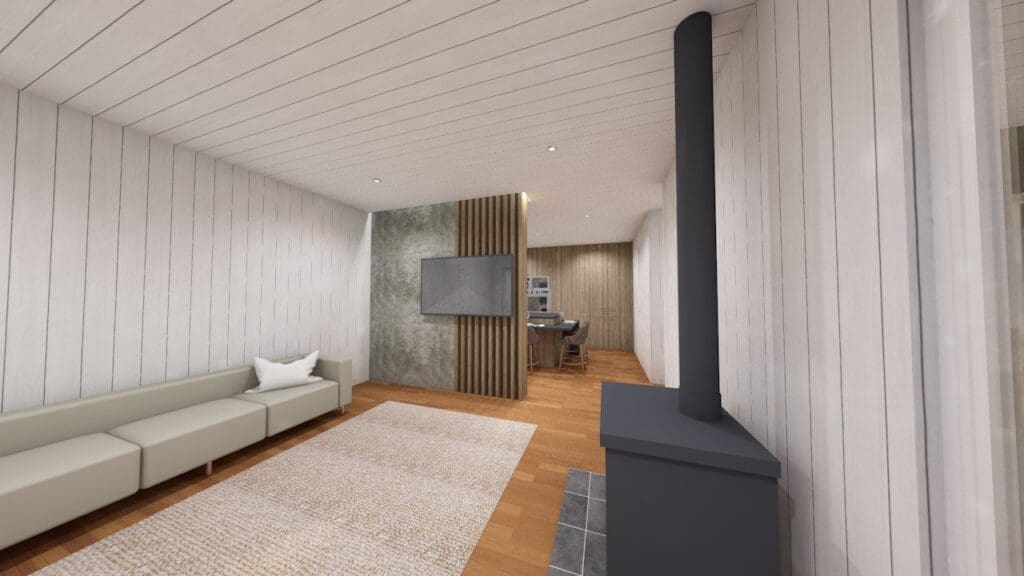
There’s a common misconception that modular homes are limited in design. In reality, modern modular construction offers a high level of flexibility.
Designs can be customised to suit:
- Different block sizes
- Layout preferences
- Future extensions
- Architectural styles
Modules can be combined, extended, or adapted over time, making modular an ideal solution for both current needs and future growth.
A Predictable, Stress-Free Process
Traditional building is often unpredictable. Delays, miscommunication, and changing timelines can create unnecessary stress for homeowners.
Modular construction offers a far more structured and transparent process.
From design to delivery, each stage is clearly defined. Controlled environments reduce the risk of delays, and streamlined workflows keep everything moving forward.
This predictability makes the entire experience more manageable, especially for first-time builders or those working on tight timelines.
Why Modular Works So Well in Regional Australia
In regional and rural areas, traditional construction can be particularly challenging.
Limited access to skilled trades, higher transport costs, and unpredictable conditions can all slow down projects and increase costs.
Modular construction addresses these challenges directly.
Because most of the work is completed off-site, there’s less reliance on local labour. Installation is quick, and site disruption is minimal, which is crucial for farms, vineyards, and tourism operations.
For many regional builds, modular isn’t just a better option, it’s often the most practical one.
A Smarter Investment Overall
When you look at the full picture, modular construction offers clear financial and practical advantages.
- Faster completion means quicker occupancy or returns
- Lower risk reduces unexpected costs
- Fixed pricing improves financial planning
- Strong, durable builds ensure long-term value
It’s not just about building faster, it’s about building smarter.
The Future of Building in Australia
Modular construction is no longer a niche solution. It’s a forward-thinking approach that aligns with modern expectations around efficiency, sustainability, and reliability.
As demand continues to grow, particularly in regional areas, modular is set to play a key role in shaping how Australians build.
For anyone comparing modular homes vs traditional builds, the shift is becoming clear. Modular isn’t just keeping up, it’s leading the way.
Ready to Build Smarter?
If you’re considering a modular home and want a faster, more predictable building experience, we’re here to help. Our team can guide you through design, pricing, and timelines to ensure your project runs smoothly from start to finish.
Get in touch with us today to discuss your project and see how modular construction can work for you.